
Services Benefits:
Slope Protection Techniques in Railway Infrastructure
-
Vegetative Slope Protection:
- Grass, shrubs, or ground cover are planted along railway embankments and slopes to protect the soil.
- Roots bind the soil, reducing the risk of erosion and surface runoff.
- This method is eco-friendly, contributing to aesthetic value and environmental sustainability
-
Retaining Walls:
- Constructing retaining walls (using materials like concrete, stone, or gabions) along embankments is a widely used technique in areas where soil movement or erosion is significant.
- It provides structural support, prevents landslides, and keeps the track alignment intact.
- Particularly useful in areas with steep slopes or when expanding railway tracks in mountainous regions.
-
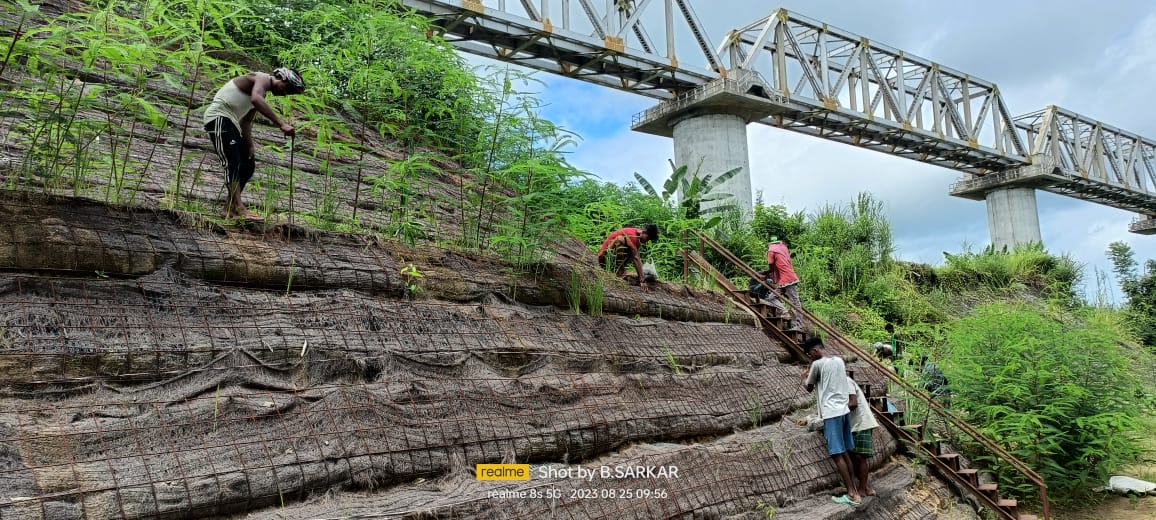
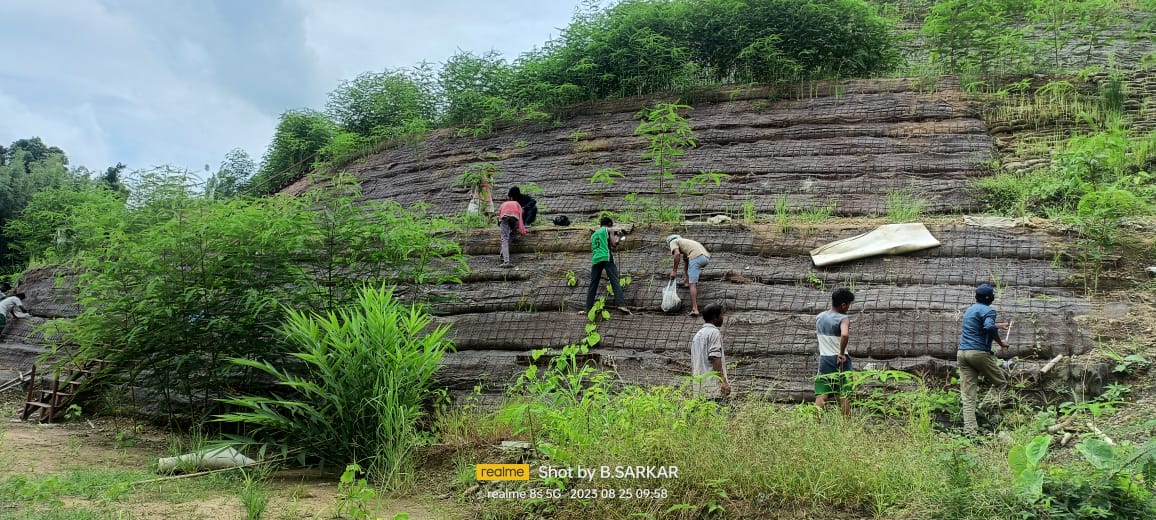
Geosynthetics (Geotextiles, Geogrids, and Geomembranes):
- Geotextiles or geogrids are used to reinforce slopes by increasing soil stability.
- Geomembranes help in controlling water drainage, thus reducing erosion caused by water runoff.
- These materials are effective in providing long-term slope protection while reducing the need for maintenance.
-
Rock and Boulder Protection:
- Rock or boulder placement is a heavy-duty method used to protect steep slopes along railways, especially in areas where water flow causes significant erosion.
- This method provides robust protection against erosion caused by rainfall and water runoff.
-
Slope Grading and Terracing:
- Grading or creating terraces helps to reduce the slope’s steepness, minimizing the potential for landslides or erosion.
- This technique is useful in stabilizing areas with significant soil instability.
-
Erosion Control Blankets:
- Erosion control mats or blankets, often made from jute or synthetic fibers, are laid over the soil surface to protect it from water erosion.
- This method is often combined with other techniques to accelerate vegetation growth and offer temporary protection